

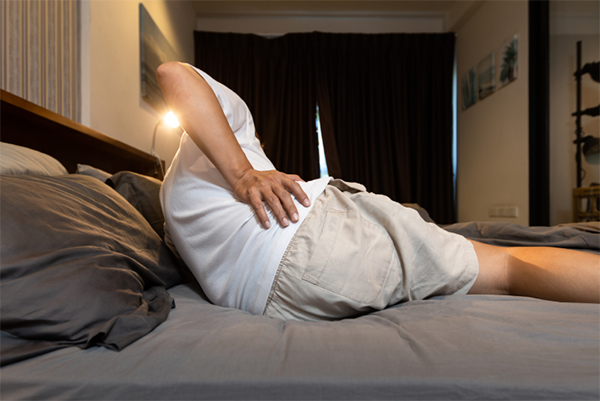
Tossing and turning at night because of hip pain? Nighttime hip discomfort is a common issue that can range from a dull ache to sharp, stabbing pain—often intensifying when lying down or trying to sleep. In many cases, the source is one of three conditions: bursitis, tendonitis, or arthritis. Here’s how to identify the root cause and explore effective solutions.
Why Does Hip Pain Get Worse at Night?
Nighttime hip pain can feel more intense for several reasons. As your body settles into rest, inflammation becomes more noticeable, and the reduced activity allows stiffness to set in. Pressure on inflamed joints or soft tissues while lying on your side can also aggravate pain. Understanding the root cause is key to finding long-lasting relief.
Bursitis: When Cushioning Becomes Inflamed
Hip bursitis occurs when the bursae—small, fluid-filled sacs that cushion your joints—become irritated. This is especially common in people who sleep on one side for prolonged periods. You may notice tenderness over the outer part of your hip, pain when lying on that side, or difficulty walking due to stiffness.
Tendonitis: Overuse and Strain
Tendonitis in the hip, often affecting the iliopsoas or gluteal tendons, results from repetitive movements or strain. Athletes and active individuals are particularly prone to this. The pain often worsens at night or after physical activity and can feel like a dull ache or a sharp, stabbing pain during movement.
Arthritis: Wear-and-Tear or Inflammatory
Hip arthritis, whether osteoarthritis or an inflammatory type like rheumatoid arthritis, is a leading cause of chronic hip pain. Symptoms include joint stiffness, limited range of motion, and a deep aching pain that often intensifies at night. In advanced stages, arthritis can severely impact mobility and sleep quality.
When to Seek Help from a Specialist
If hip pain disrupts your sleep for more than a few nights or worsens over time, it’s time to consult a specialist. Advanced diagnostic tools and robotic-assisted surgery now offer more precise, minimally invasive solutions for conditions like arthritis—helping restore mobility and relieve pain with faster recovery times.
AUTHOR: Dr. Christopher W. Palmer, DO – Orthopedic Surgeon & Robotic Total Joint Replacement Specialist
Dr. Christopher W. Palmer, DO is an orthopedic surgeon specializing in Mako robotic-assisted total joint replacement, minimally invasive joint procedures at Signature Medical Group. Recognized as a leading robotic total joint surgeon in Missouri, Dr. Palmer has performed more than 2,000 robotic joint replacement procedures and brings advanced, technology-driven orthopedic care to the St. Louis area through Signature Orthopedics.
Credentials & Education
Dr. Palmer earned his Doctor of Osteopathic Medicine degree from A.T. Still University/Kirksville College of Osteopathic Medicine. He completed his internship at Des Peres Hospital and his orthopedic surgery residency at Des Peres Hospital in affiliation with Saint Louis University and Cardinal Glennon Children’s Hospital. He also holds a bachelor’s degree in microbiology from Weber State University, providing a strong academic foundation in infectious disease research and surgical safety. He maintains multiple advanced certifications, including Advanced Trauma Life Support (ATLS), Advanced Cardiovascular Life Support (ACLS), Pediatric Advanced Cardiovascular Life Support (PALS), Basic Life Support (BLS), and National Institutes of Health Stroke Scale (NIHSS) certification. Dr. Palmer is an active member of the American Academy of Orthopaedic Surgeons (AAOS) and the American Association of Hip and Knee Surgeons (AAHKS), reflecting his commitment to advancing orthopedic care and staying current with the latest developments in hip and knee surgery.
Clinical Expertise
Dr. Palmer focuses on robotic-assisted total and partial joint replacement of the hip and knee, minimally invasive joint procedures, joint arthroscopy, and orthopedic trauma. His expertise in robotic technology allows for enhanced surgical precision, personalized implant positioning, and optimized recovery pathways.
In addition to his clinical practice, Dr. Palmer serves as a board member at Steri 3X and as a medical consultant for Convatec and Ethicon, contributing to advancements in infection prevention, wound care, and surgical innovation.
Medical Disclaimer: This information is for educational purposes only and does not constitute medical advice. For diagnosis and treatment recommendations, please consult with Dr. Palmer or another qualified orthopedic specialist.


